Waterproof Stickers: Materials, Uses and Care
Learn what to consider when choosing waterproof stickers for bottles, jars and frequently handled surfaces, including material and application.
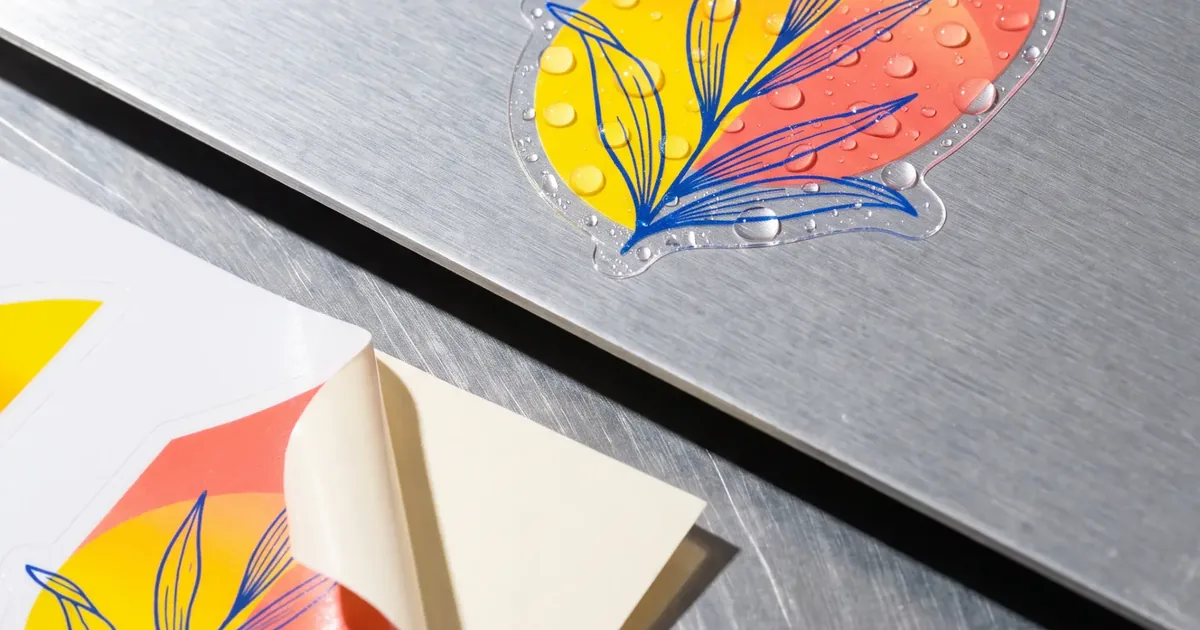
Waterproof stickers are commonly requested for bottles, jars, bathrooms, kitchens and products that may meet condensation. Performance depends on more than the printed surface: material, finish, adhesive, application and the condition of the container all matter.
Start with vinyl and the right finish
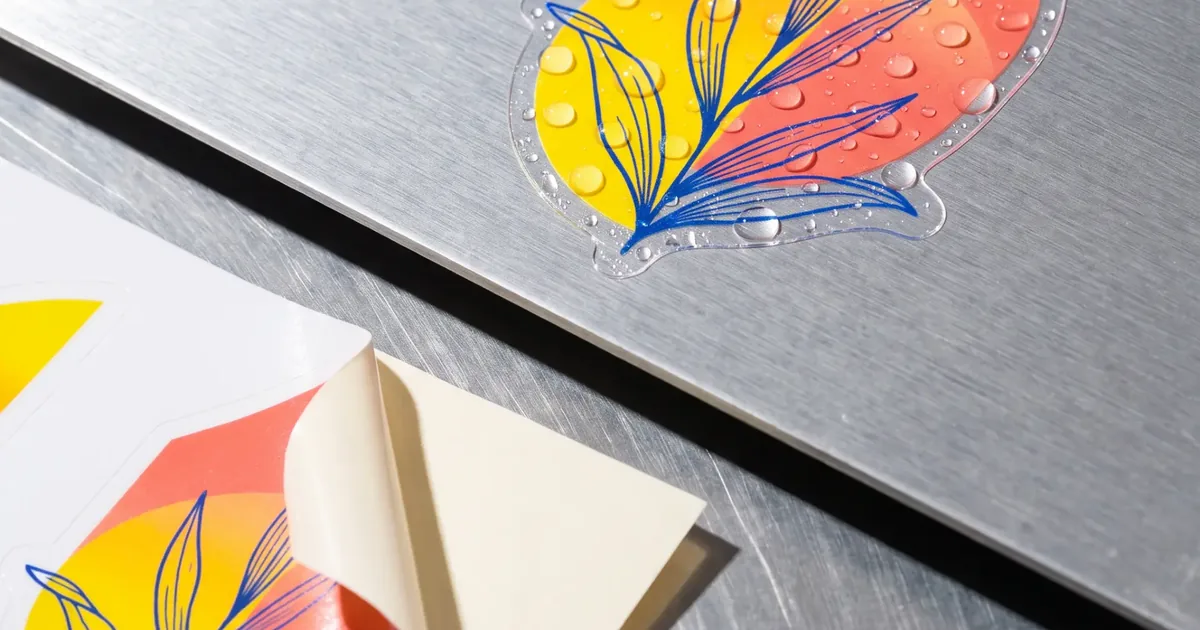
Vinyl is generally chosen for moisture-prone applications because it does not behave like ordinary paper when wet. A suitable laminated finish can add protection to the printed surface. Confirm the available material and finish combination for your order rather than assuming every sticker is waterproof.
Understand the difference between splashes and immersion
A sticker that handles occasional splashes may not be intended for prolonged soaking, dishwashers, harsh chemicals or high heat. Describe the real environment when choosing a specification. For demanding applications, test on the final product before committing to a large run.
- Water and condensation exposure
- Refrigeration or temperature changes
- Cleaning products
- Surface texture and curvature
- Expected life after application
Application affects the result
Clean and dry the surface, then apply at a stable temperature. Oils, dust and condensation can weaken contact. Press from the centre outward and allow the adhesive time to settle before exposing the item to moisture.
Use clear and white vinyl differently
Clear vinyl allows the container or product colour to show through and suits minimal designs. White vinyl gives artwork a consistent background and can strengthen colour contrast. Mock up both options on the actual surface to see which keeps the brand and required information easiest to read.